On-Neck Pattern
Bearish Continuation PatternWhat is On-Neck Pattern?
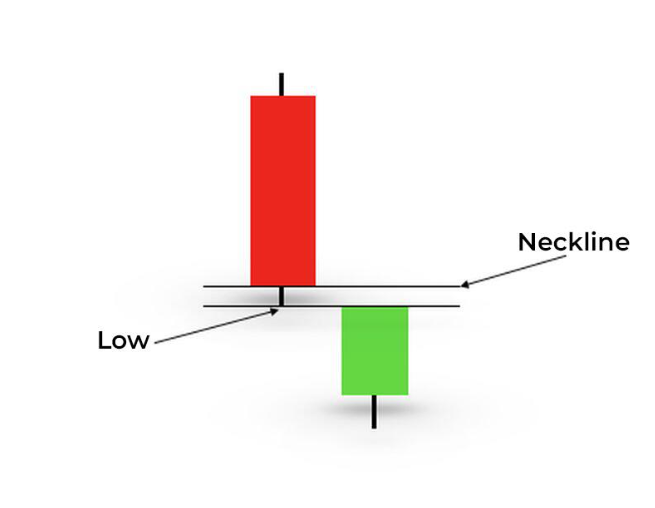
On-Neck Pattern is a bearish continuation candlestick pattern that appears during a downtrend. It consists of a long bearish candle followed by a small bullish candle that closes near the low of the previous candle, indicating weak buying pressure and continuation of the downtrend.
Structure of the Pattern
- The pattern consists of two candles:
- Candle 1: A long bearish candle indicating strong selling pressure.
- Candle 2: A small bullish candle that opens below the low of the first candle (gap down).
- The second candle closes near or slightly above the low of the first candle.
- The closing level appears to 'rest on the neck' of the first candle.
Key Conditions for Formation
- The pattern must occur during a clear downtrend.
- The first candle should be strongly bearish.
- There should be a gap down before the second candle.
- The second candle should be small and bullish.
- The closing of the second candle should be near the previous low.
Detailed Explanation
The On-Neck Pattern reflects a temporary pause in a downtrend. While the second candle shows a slight attempt by buyers to push prices upward, it fails to make significant progress.
The inability of the bullish candle to close significantly higher indicates weak buying interest, suggesting that the downtrend is likely to continue.
- Second candle shows weak bullish attempt.
- Gap down confirms strong bearish sentiment.
- Failure to rise indicates continuation.
- Pattern signals trend persistence.
Market Psychology
The psychology behind the On-Neck Pattern reflects continued dominance of sellers despite a brief attempt by buyers.
- Sellers dominate the market and push prices lower.
- Buyers attempt a recovery but fail to gain strength.
- The weak bullish candle reflects lack of conviction.
- Sellers regain control, continuing the downtrend.
Trade Interpretation
- Entry: Traders may enter short positions after confirmation of continuation.
- Confirmation: A bearish candle following the pattern.
- Stop Loss: Above the high of the second candle.
- Target: Based on support levels or continuation trend.
Timeframe Relevance (Algo Context)
In a 5-minute timeframe environment:
- The pattern forms over 2 candles (10 minutes).
- It becomes active after the second candle closes.
- Confirmation is required within the next candle.
- Useful for continuation signals in intraday trading.
Role of Volume
Volume helps validate the pattern:
- High volume during the first candle confirms strong selling.
- Low volume during the second candle indicates weak buying.
- Volume spike in next bearish candle strengthens continuation.
Using Indicators for Confirmation
To improve reliability, traders combine this pattern with indicators:
- RSI: Should remain in bearish zone.
- MACD: Bearish trend confirmation.
- Volume: Increased selling volume supports continuation.
When to Avoid
- When there is no prior downtrend.
- When the second candle is strong bullish.
- In sideways markets.
- During low-volume conditions.
Precautions
- Always confirm continuation with next candle.
- Avoid entering trades prematurely.
- Use stop loss to manage risk.
- Combine with trend indicators.
Related Patterns
- In-Neck Pattern
- Thrusting Pattern
- Falling Window
- Bearish Continuation Patterns
Practical Insights
In algorithm-based detection systems:
- Detect strong bearish first candle.
- Identify gap down before second candle.
- Check second candle closes near previous low.
- Validate existing downtrend.
Example Scenario
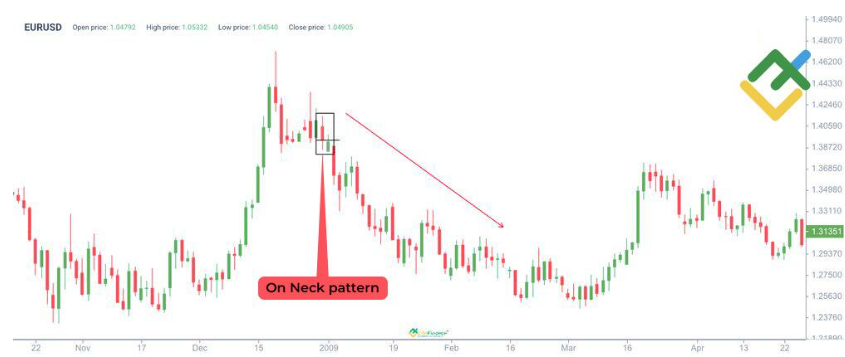
During a sustained downtrend, a stock opens with a sharp decline forming a long bearish candle. In the next session, the price gaps down but shows a slight upward move, closing just around the previous candle's low. This weak bounce fails to attract strong buyers, and the price resumes falling in the following sessions, confirming continuation of the downtrend.
SUMMARY
- Pattern Type: Bearish Continuation
- Candles Required: 2
- Key Signal: Weak bullish close near previous low
- Best Use Case: During downtrend
- Confirmation Needed: Yes
- Reliability: Medium