Bearish Marubozu
Bearish Continuation PatternWhat is Bearish Marubozu?
Bearish Marubozu is a strong bearish candlestick pattern that indicates dominant selling pressure in the market. It typically appears during a downtrend or at the beginning of a potential reversal from an uptrend. The pattern reflects strong momentum where sellers are in full control throughout the trading session.
Structure of the Pattern
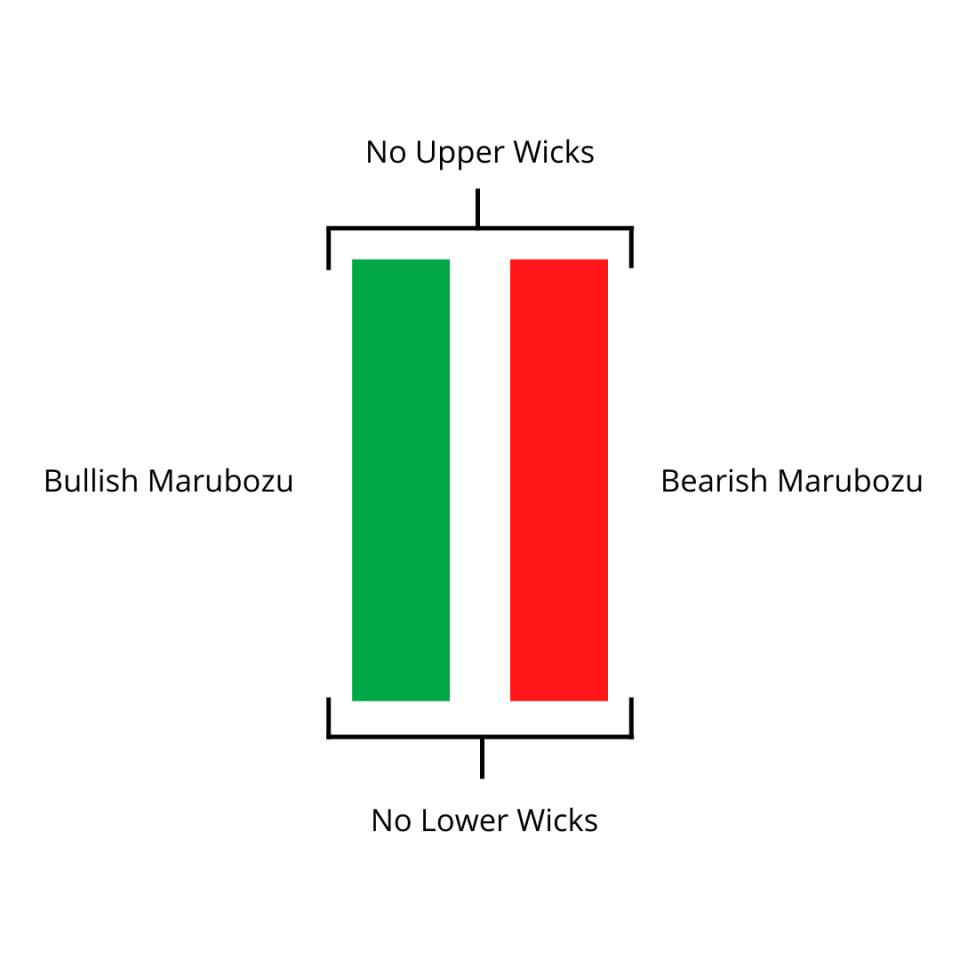
The Bearish Marubozu pattern consists of a single candlestick with the following characteristics:
- Body: A long bearish body where the close price is significantly lower than the open price.
- Upper Shadow: Little to no upper shadow, indicating price opened near the highest point.
- Lower Shadow: Little to no lower shadow, indicating price closed near the lowest point.
Key Conditions for Formation
- The candle must be strongly bearish (close < open).
- The body should be large compared to recent candles.
- Both upper and lower shadows should be very small or negligible.
- The candle should open near its high and close near its low.
- The pattern should indicate strong downward momentum.
Detailed Explanation
The Bearish Marubozu pattern represents complete dominance of sellers during the trading session. From the opening of the candle, sellers push the price steadily downward without allowing buyers to create significant pullbacks.
This results in a long, solid bearish candle with little to no shadows. The absence of shadows indicates that there was no significant rejection at either end, and sellers maintained control throughout.
The reliability of the pattern increases when:
- The candle body is large and clearly visible.
- Shadows are minimal or non-existent.
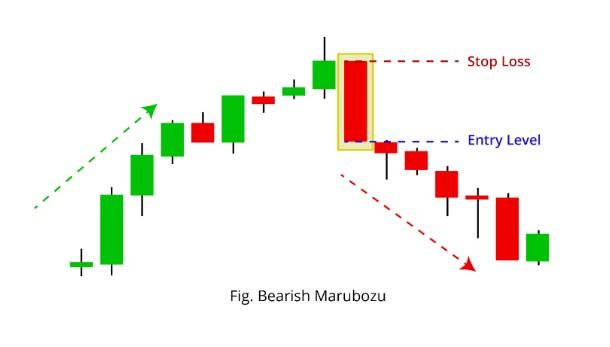
- The pattern appears after an uptrend or during a breakdown.
Market Psychology
This indicates strong supply and suggests continuation of the downtrend or reversal from a prior uptrend.
The psychology behind the Bearish Marubozu pattern reflects strong bearish sentiment:
- Sellers take control from the beginning of the session.
- Continuous selling pressure pushes the price downward.
- Buyers are unable to create any meaningful recovery.
- The close near the low reflects strong confidence among sellers.
Trade Interpretation
- Entry: Traders often enter a short position at the close of the Marubozu candle or on slight pullbacks.
- Confirmation: Follow-through selling in the next candle confirms strength.
- Stop Loss: Usually placed above the high of the Marubozu candle.
- Target: Targets are set based on support levels or trend continuation strategies.
Timeframe Relevance (Algo Context)
In a 5-minute timeframe environment:
- The pattern forms in a single candle.
- It becomes active immediately after the candle closes.
- It remains valid for the next 1-2 candles.
- Strong momentum makes quick execution important.
Role of Volume
Volume plays a crucial role in validating the pattern:
- High volume confirms strong selling interest.
- Low volume reduces reliability of the move.
Using Indicators for Confirmation
To improve reliability, traders combine the Bearish Marubozu pattern with technical indicators:
- RSI: Look for overbought or downward momentum shift.
- MACD: Bearish crossover supports continuation.
- Volume: Increasing volume confirms strength.
When to Avoid
- When the candle is not significantly larger than previous candles.
- When shadows are clearly visible (not a true Marubozu).
- In sideways or low-volume markets.
- During sudden news-driven spikes without follow-through.
Precautions
- Always confirm with additional indicators or price action.
- Avoid entering trades late after extended moves.
- Monitor support levels before taking positions.
- Be cautious of false breakdowns in low-volume conditions.
Related Patterns
- Bullish Marubozu (bullish counterpart)
- Bearish Engulfing
- Shooting Star
- Evening Star
Practical Insights
In real-world trading systems, including algorithm-based detection:
- The pattern is identified using OHLC data and shadow-to-range ratios.
- Trend and momentum validation help reduce false signals.
- Duplicate signals are filtered within short time intervals.
- Signals are marked active or expired based on time window.
Example Scenario
Consider a stock that opens at a high price and continuously declines throughout the session without any significant upward movement. The candle closes at or near its lowest point, forming a strong bearish Marubozu. This indicates that sellers were in complete control and the price is likely to continue downward or reverse from a prior uptrend.
SUMMARY
- Pattern Type: Bearish Momentum / Reversal
- Candles Required: 1
- Key Signal: Strong bearish body with no shadows
- Best Use Case: Breakdowns or after uptrend
- Confirmation Needed: Yes (Follow-through selling)
- Reliability: High when supported by volume and trend