Bearish Counterattack
Bearish Reversal PatternWhat is Bearish Counterattack Pattern?
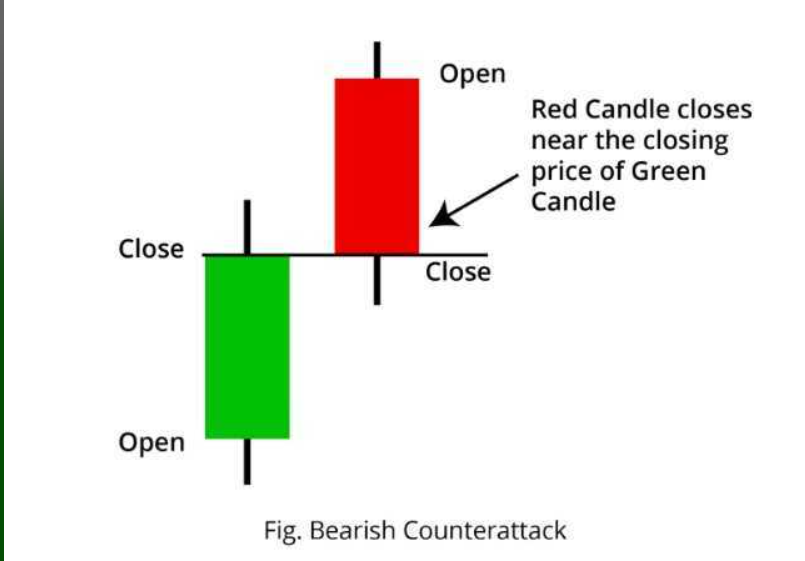
Bearish Counterattack is a two-candle reversal pattern that appears after an uptrend. It occurs when a strong bullish candle is followed by a bearish candle that opens higher but closes at or near the same level as the previous close, indicating strong resistance and a potential reversal.
Structure of the Pattern
- The pattern consists of two candles:
- Candle 1: A strong bullish candle indicating continued upward momentum.
- Candle 2: A bearish candle that opens above the high of the first candle (gap up).
- The second candle closes at or near the closing price of the first candle.
- The matching close level forms the 'counterattack' signal.
Key Conditions for Formation
- The pattern must occur after a clear uptrend.
- The first candle should be strongly bullish.
- The second candle should open with a gap up.
- The second candle should close near the first candle's close.
- The pattern should reflect rejection at higher levels.
Detailed Explanation
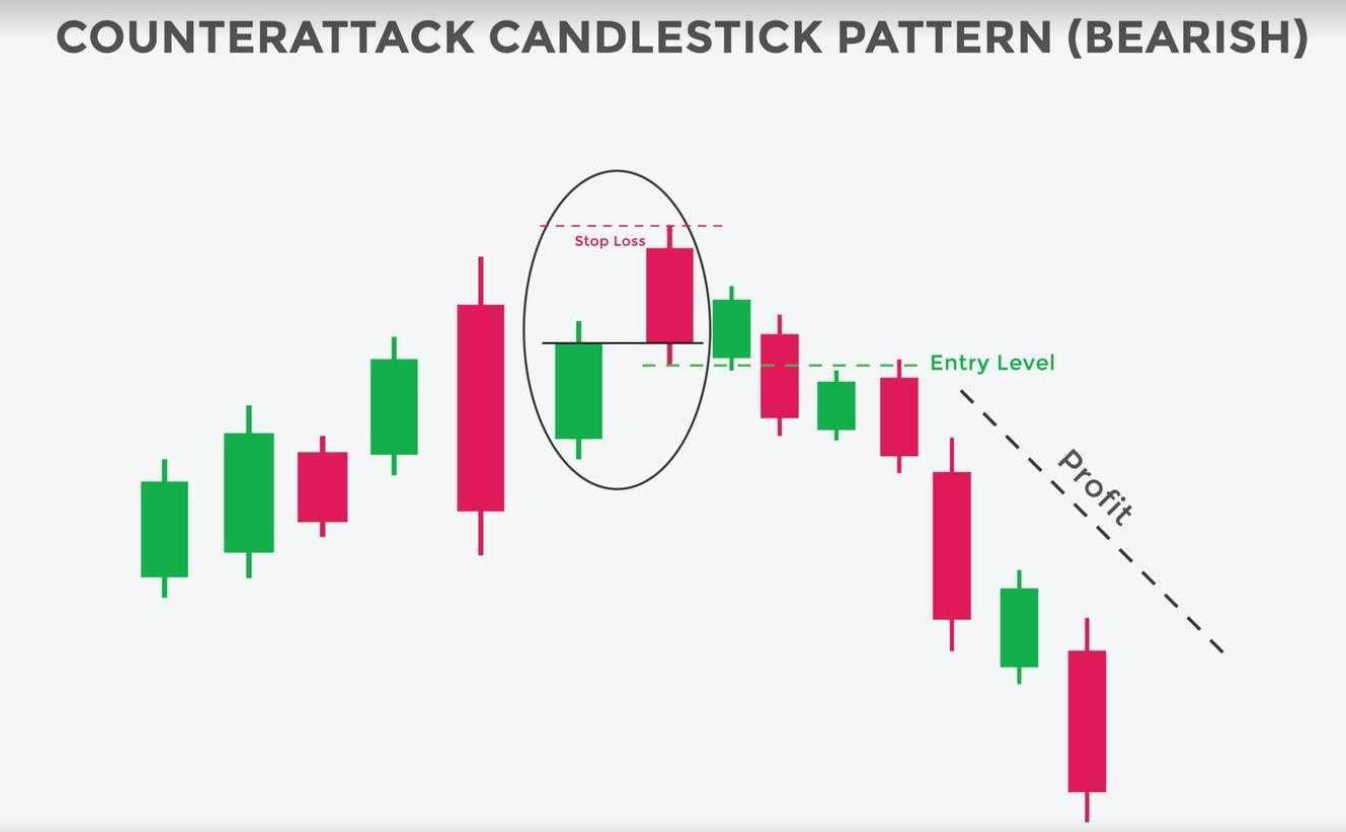
The Bearish Counterattack pattern signals a potential reversal in trend. While the market initially opens higher, suggesting continued bullish sentiment, sellers quickly step in and push the price back down.
The closing price near the previous close indicates strong resistance and a failure of buyers to maintain control.
- Gap up suggests bullish continuation initially.
- Sharp reversal indicates strong selling pressure.
- Matching close shows resistance level.
- Pattern signals potential trend reversal.
Market Psychology
The psychology behind the Bearish Counterattack pattern reflects a sudden shift from bullish optimism to bearish dominance.
- Buyers push prices higher initially.
- Gap up creates expectation of continued rise.
- Sellers aggressively enter and reverse the move.
- Market sentiment shifts as resistance holds.
Trade Interpretation
- Entry: Traders may enter short positions after confirmation of reversal.
- Confirmation: A bearish candle following the pattern.
- Stop Loss: Above the high of the second candle.
- Target: Based on support levels or risk-reward ratios.
Timeframe Relevance (Algo Context)
In a 5-minute timeframe environment:
- The pattern forms over 2 candles (10 minutes).
- It becomes active after the second candle closes.
- It remains relevant for the next few candles.
- Useful for detecting quick reversals.
Role of Volume
Volume helps validate the pattern:
- High volume during second candle confirms strong selling.
- Volume spike indicates aggressive market participation.
- Low volume reduces reliability.
Using Indicators for Confirmation
To improve reliability, traders combine this pattern with indicators:
- RSI: Look for overbought conditions.
- MACD: Bearish crossover strengthens signal.
- Resistance Levels: Pattern near resistance increases reliability.
When to Avoid
- When there is no prior uptrend.
- When the second candle is weak.
- In sideways markets.
- During low-volume conditions.
Precautions
- Always wait for confirmation before trading.
- Avoid relying solely on this pattern.
- Use stop loss to manage risk.
- Combine with indicators for better accuracy.
Related Patterns
- Bullish Counterattack
- Dark Cloud Cover
- Evening Star
- Bearish Engulfing
Practical Insights
In algorithm-based detection systems:
- Detect gap up between candles.
- Check for matching or near-equal closing levels.
- Validate prior uptrend.
- Confirm bearish follow-through.
Example Scenario
A stock in an uptrend opens higher than the previous close, suggesting continued bullish sentiment. However, strong selling pressure pushes the price down to close near the previous level, indicating resistance and a potential reversal.
SUMMARY
- Pattern Type: Bearish Reversal
- Candles Required: 2
- Key Signal: Gap up + matching close
- Best Use Case: Near resistance after uptrend
- Confirmation Needed: Yes
- Reliability: Medium